
Real missions. Big questions.
Where will your curiosity take you?
Explore planets and moons, follow spacecraft, visit mission sites, and discover the science behind it all — with Sage as your guide.
Try: “Hey Sage, take me to Mars.” Turn on voice in Explore first — Space Out never listens until you do.
For families: what can we learn together? ↓Jupiter from Juno · NASA/JPL-Caltech/SwRI/MSSS/Kevin M. Gill
Explore space
Find your place in the solar system
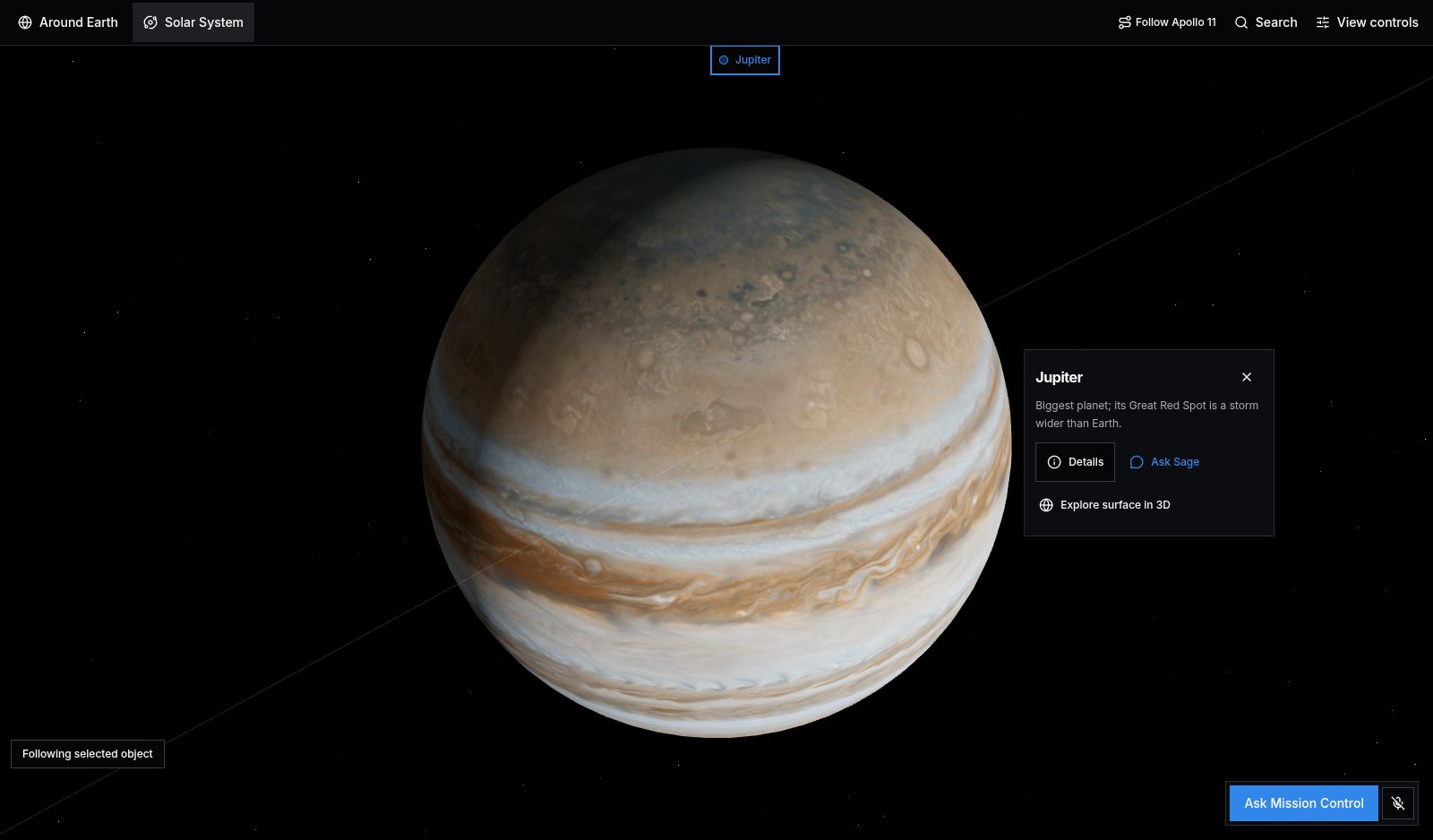
Fly between planets, moons and spacecraft. Zoom out from the space station circling Earth all the way to the outer planets, with real distances and sizes kept to scale.
- How far away is the Moon, really?
- Where are the Voyagers now?
- What makes Jupiter’s moons different?

Apollo 11 · NASA

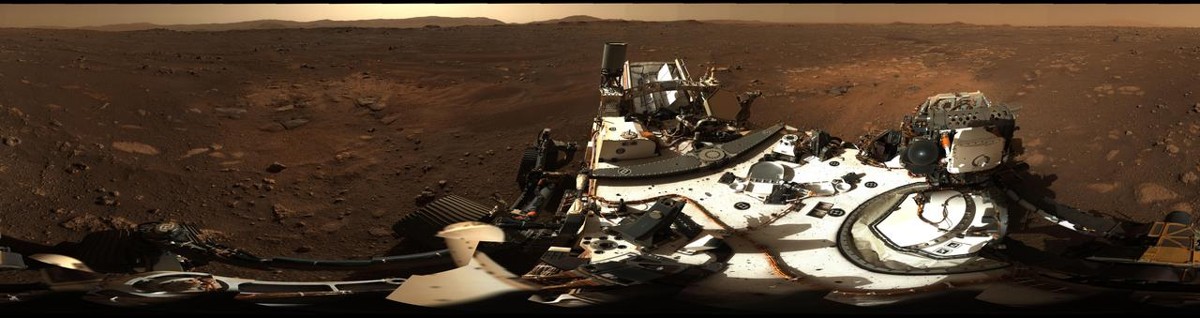
Perseverance & Ingenuity · NASA/JPL-Caltech/MSSS
Discover missions
Go where exploration happens
Follow missions from Mercury to Artemis, meet their crews, walk through Apollo 11’s journey, and zoom into real NASA orbital imagery of Mars rover landing sites.
- Why did Perseverance land in Jezero Crater?
- What happened during Apollo 11’s journey?
- What can a rover discover that an orbiter cannot?

Watch launches
See what’s heading to space next
Live countdowns to rockets from around the world, with what each one carries and why it’s going.
- What is this rocket carrying?
- Where is it going?
- What will its payload do?
Checking the launch schedule…
Artemis I launch · NASA/Joel Kowsky
Make & experiment
Bring space exploration home
Build, test and investigate with NASA activities linked to the missions you explore. Each one lists materials, time and grade range, and links to NASA’s full instructions.

Build
Balloon-powered nanorover
Air rushing out the back pushes your rover forward — engineers test rovers just like this before they go to Mars.
About 45 min · Grades 3–8

Experiment
Moon phases with cookies
About 20 min · Grades K–5

Challenge
Design a Moon habitat
About 60 min · Grades 3–8
Activity images: NASA Space Place
Find an activityYour guide
Meet Sage, your guide to exploring space
Sage is an AI guide that can move you around Explore and help you dig into whatever you find. Like any AI, Sage can make mistakes — each mission page links to its sources so you can check.
- Turn on voice with the microphone button in Explore. Your browser asks permission the first time.
- 1Say “Hey Sage” to begin.
- 2Start each spoken request with “Sage.”
- Prefer typing? Ask Mission Control works without a microphone.
“Hey Sage, take me to Jupiter.”
Moves Explore to Jupiter
“Sage, show me its moons.”
Keeps the conversation on Jupiter
“Sage, why is Europa interesting?”
Answers with an explanation
One example path
One question can take you somewhere unexpected
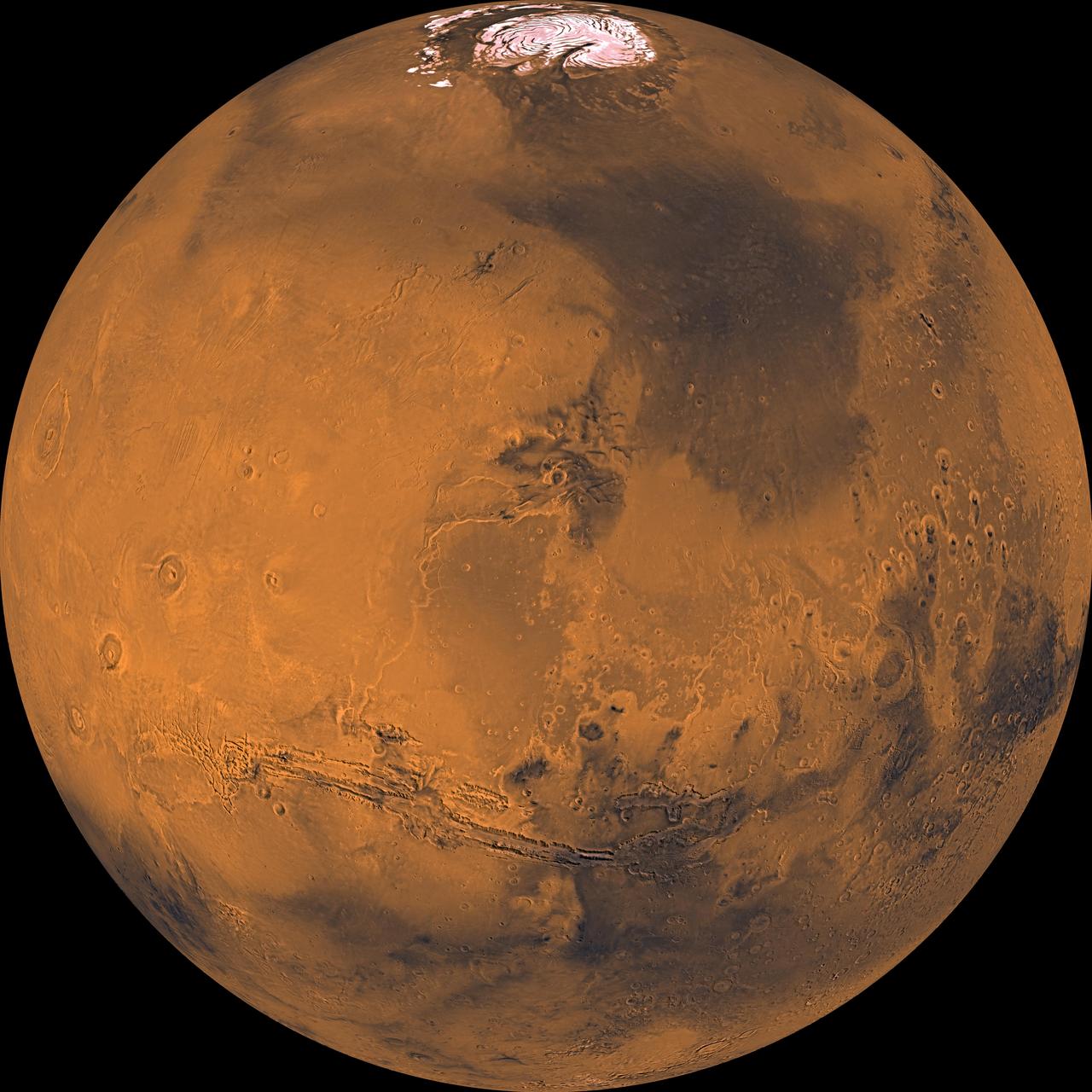 01Visit MarsFind the red planet and spin its globe.
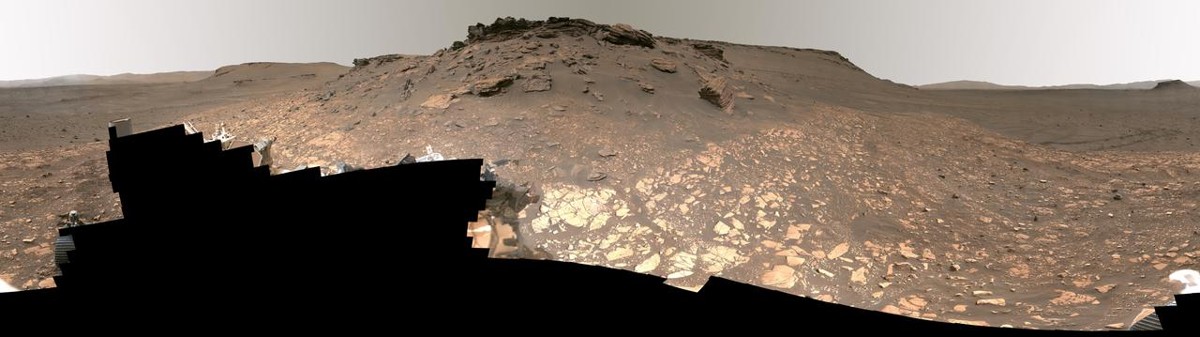 02Follow a roverSee where Perseverance landed and the route it drove.
 03Investigate the scienceLearn what its instruments measure and why.
- 04Try something yourselfBuild a balloon-powered rover at home.
Images: NASA/JPL-Caltech/USGS, NASA/JPL-Caltech/ASU/MSSS, NASA Space Place
For families
Big questions. Meaningful exploration.
Space Out connects real missions, scientific ideas, conversation and hands-on activities, so you and your child can explore side by side and follow whatever sparks interest.
- Space and scale
- Compare worlds, distances and planetary systems on a true-to-scale map.
- Science and evidence
- Investigate what missions measure and what their discoveries mean.
- Engineering
- Inspect NASA 3D spacecraft models and the choices behind each mission.
- Exploration and history
- Meet astronauts, visit landing sites and follow Apollo 11’s journey.
- Hands-on investigation
- Build, test and observe with NASA activities, then ask new questions.
Two reading levels, same facts
Switch between Kids and Adults anytime from the top of the page. Missions, maps and photos stay the same; explanations and Sage’s answers change depth. Curious kids are welcome to try Adults — it’s just more detailed. Here’s a real example from the Perseverance mission page:
Kids · Ingenuity helicopter
A 1.8 kg helicopter rode along and flew 72 times in air only 1% as thick as Earth's. It proved flying on another planet is possible — scouts for future rovers and humans.
Adults · Ingenuity helicopter
Ingenuity completed 72 flights using rapidly rotating blades in an atmosphere approximately 1% as dense as Earth’s. The flights established the feasibility of powered rotorcraft on Mars; aerial scouting can provide terrain information beyond a rover’s immediate line of sight.
Practical activity details
Activities show materials, approximate time, grade range, safety notes and whether a grown-up helper is useful.
Trusted sources
Mission content, imagery and activities come from NASA and other space agencies, with links to originals.
An AI guide, not an oracle
Sage is helpful for conversation and curiosity, but answers can be wrong. Checking sources together is part of the fun.

Start with one question
Pick a place to begin. Everything connects from there.