NASA
Friendship 7 (Mercury)
John Glenn becomes the first American to orbit Earth.
- Status
- Completed
- Launched
- Feb 20, 1962
- Where
- 3 orbits of Earth
Why this mission?
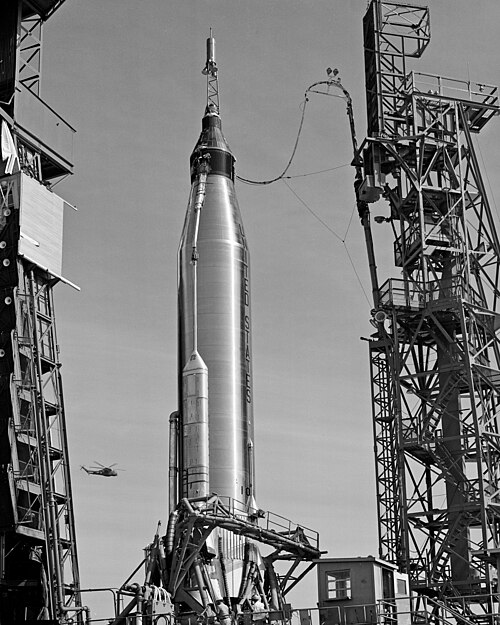
Project Mercury was America's first human spaceflight program. Each tiny capsule held one astronaut. On Friendship 7, John Glenn circled Earth three times in under 5 hours, proving people could live and work in weightlessness.
The astronaut
The science
Human health
Can humans work in space?
How it works
Glenn ate food from a tube, took photos, and flew the capsule by hand when the automatic controls had a problem.
Why it matters
Some doctors worried eyes or swallowing wouldn't work without gravity. Glenn showed they did.
Investigate the evidence
How can scientists tell which changes come from being in space?
What scientists measure
They measure astronauts before, during and after a flight. They also compare results with people on Earth. Repeating the same checks helps them spot changes instead of relying on how someone feels.
What this cannot tell us
Only a small number of people fly to space. People have different bodies, diets and exercise routines, so one astronaut's result cannot tell us everything.
Try it at home
All activities →Hands-on NASA activities connected to Friendship 7 (Mercury). Tap one to open it.
Watch & look
Real footage and photos from NASA's archive.
Whoa, really?
- A warning light suggested the heat shield was loose, so Glenn kept his retro-rockets strapped on during re-entry — they burned up as he fell.
- Glenn flew to space again in 1998 on the Space Shuttle, aged 77.
Talk about it
Would you rather fly alone in a tiny capsule, or with a crew in a big ship?