NASA
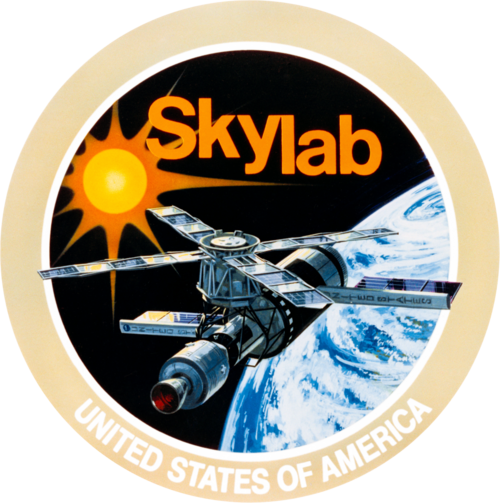
Skylab
America's first space station, built from a leftover rocket stage.
- Status
- Completed
- Launched
- May 14, 1973
- Where
- Earth orbit
Why this mission?
Skylab was made from the empty third stage of a Saturn V. Three crews lived there for up to 84 days, studying the Sun, Earth, and how bodies adapt to long stays in space.
The science
Energy & space weather
Watching the Sun
How it works
A telescope mount took thousands of pictures of solar flares and the Sun's corona.
Why it matters
It changed how scientists understand the Sun's outer atmosphere and solar storms.
Investigate the evidence
How do scientists connect what happens near the Sun to what reaches Earth?
What scientists measure
Cameras watch the Sun while sensors measure fast particles and magnetic fields. Comparing the times and patterns helps scientists follow how energy moves.
What this cannot tell us
One spacecraft can only measure where it is. The Sun changes quickly, so scientists need several viewpoints and cannot predict every storm perfectly.
Try it at home
All activities →Hands-on NASA activities connected to Skylab. Tap one to open it.
Watch & look
Real footage and photos from NASA's archive.
Whoa, really?
- Part of the heat shield ripped off at launch, so the first crew put up a sunshade like a giant umbrella.
- It fell back to Earth in 1979, with pieces landing in Australia.
Talk about it
What's something you'd bring to make a space station feel like home?