Soviet Union
Sputnik 1
The first human-made object to orbit Earth — it started the Space Race.
- Status
- Completed
- Launched
- Oct 4, 1957
- Where
- Low Earth orbit
Why this mission?
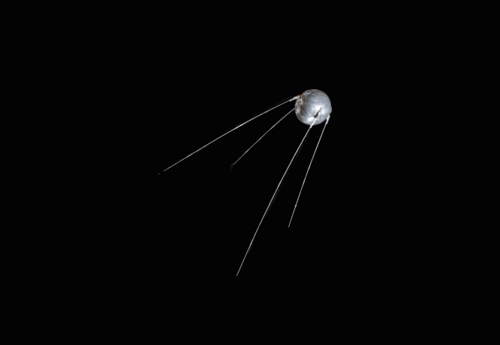
Sputnik was a shiny metal ball about the size of a beach ball with four long antennas. It beeped a radio signal that anyone with a radio could hear. It proved satellites were possible and pushed the United States to create NASA a year later.
The science
Worlds & their history
Studying the upper atmosphere
How it works
Scientists tracked how fast Sputnik's orbit shrank as thin air dragged on it.
Why it matters
That told them how thick the air is high above Earth — important for every satellite since.
Investigate the evidence
How can rocks and spacecraft motion tell a planet's story?
What scientists measure
Scientists compare rock layers, minerals and surface shapes. A spacecraft's changing motion can also reveal how a world's mass is spread inside.
What this cannot tell us
A rover only sees a tiny part of a planet. A picture cannot always tell us how old something is. Scientists need several kinds of clues to work out what happened.
Try it at home
All activities →Hands-on NASA activities connected to Sputnik 1. Tap one to open it.
Watch & look
Real footage and photos from NASA's archive.
Whoa, really?
- It circled Earth every 96 minutes.
- Its batteries died after 21 days, and it burned up in the atmosphere 3 months later.
Talk about it
Why do you think one small beeping ball scared and excited so many people?